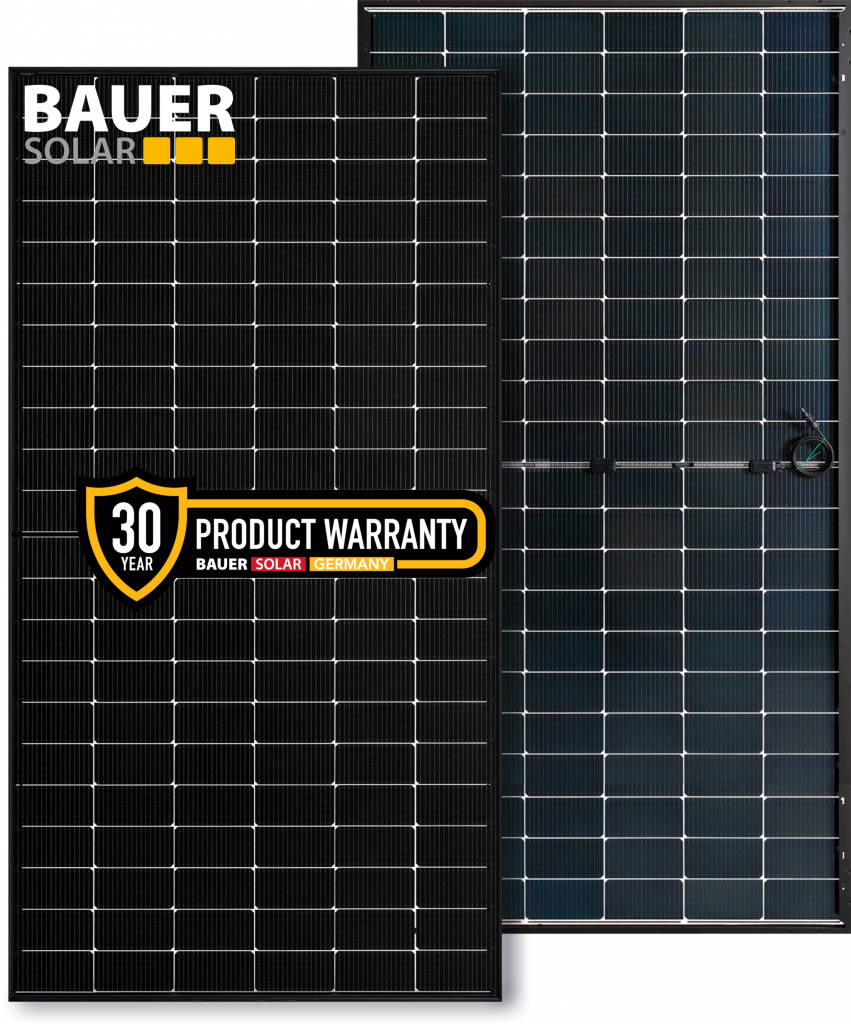
HailProtect Hail Resistant Modules Available Now
BAUER SOLAR IS THE PIONEER IN HAIL RESISTANT MODULES IN CANADA WITH A 3.2 MM FULLY TEMPERED FRONT GLASS AND 2.0 MM HEAT STRENGTHENED REAR GLASS, TESTED TO 50 MM HAIL STONES
BAUER’S HAILPROTECT™ HAIL RESISTANT REINFORCED GLASS ARCHITECTURE COMPARED TO STANDARD 2.0 + 2.0 MM MODULES DELIVERS:
2.5× greater impact tolerance
4× higher glass stiffness = increases the overall rigidity of the module
Reduced microcracking risk = lower power degradation over time
Improved long-term structural stability
Reduced installation breakage from clamp tightening
Improved wind and snow load durability

WHY HAILPROTECT?
Increasing Hail Storms
The probability of PV module hail damage is growing rapidly as hailstorms are becoming more powerful and PV installations increase in size and frequency across Canada
Insurability
Insurance companies are demanding increased hail resistance for all building materials including solar modules
accessibility
There are no hail resistant modules available in the Canadian market from Chinese manufacturers below 15 MW minimum order quantity, which is inaccessible to most companies
Benefits of HailProtect in non-hail regions
Better performance retention
over 30 years
Thicker glass doesn’t just help with hail—it improves resistance to: Thermal stress (freeze/thaw cycles) Mechanical loads (snow, wind pressure) Microcracking from handling or vibration Microcracks can reduce output over time, even without visible damage. A more robust module slows that degradation curve
Lower perceived project risk
and lower insurance premiums
Hail is one of the largest drivers of solar insurance claims globally HailProtect modules reduce perceived risk for insurers and lenders and potentially improve financing terms or insurability Insurers are also concerned about non-hail weather events and increasing frequencies of storms All commercial project proposals over 0.5 MW received by BAUER Solar Canada in the last 12 months in Alberta have included requests for “hail risk mitigation” strategies, even when the proposed project was outside of “hail alley”
Less hidden performance
loss
Moderate impacts such as debris, mishandling, or small hail can cause cell-level cracks that aren’t visible but reduce output HailProtect modules are built to absorb and distribute impact energy better (thicker glass and frames)
Fewer failures across all stress scenarios
Extreme weather volatility is increasing Storms are becoming more violent, creating opportunities for physical damage from wind, debris, etc. HailProtect modules have better wind load tolerance, better snow load handing, and improved durability during transport/install Non-hail weather related events are increasing in frequency and strength Hail is becoming less geographically predictable